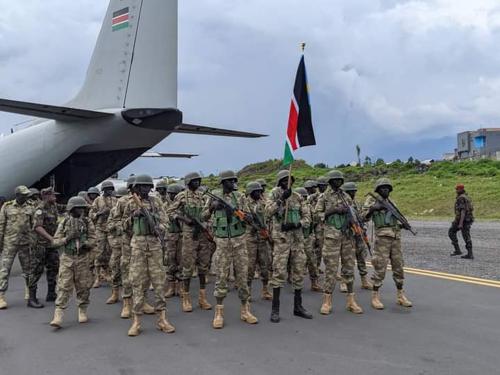
The East African Community (EAC) decided, Wednesday, May 31 in Bujumbura (Burundi), at the end of the 21st summit of the organization, to extend, until September 8, the mandate of its force regional team deployed in the Democratic Republic of Congo (DRC).
This summit, which lasted three days, was, among other things, devoted to evaluating the conduct of military operations carried out by the regional force in the province of North Kivu, in eastern DRC, which is plagued by insecurity, knowing that his mandate should end this Thursday, June 01.
Two heads of state were present at the meeting, notably the Kenyan William Ruto and the Burundian Evariste Ndayishimiye, also current president of the EAC. The other countries of the Community were represented by members of the government or other senior officials.
The extension of this mandate has caused several observers to react, given that, at the beginning of May, Congolese President Félix Tshisekedi had hinted that the regional force of the EAC could be asked to leave the country at the end of June, insofar as its mission « is not fulfilled », three months after its full deployment.
The leader of the DRC also denounced the complacency of the contingents of certain EAC countries with the M23 rebellion which clashes with the Congolese army. For several months, Kinshasa has accused Kigali of supporting this rebel movement.
In any case, the EAC says it has maintained its strength to consolidate the “progress” made on the ground. The summit also decided on the pre-cantonment of the M23 rebels in Rumangabo (North Kivu).
Furthermore, « the summit again called on all parties to defuse tensions and use the regional, continental and international mechanisms in place to resolve all conflicts and move towards peace in eastern DRC ».
By OMA Newsletter N° 1198 of 01/06/2023
Article published under the direction of Dr. Najib Kettani
The OMA, NGO with an Intercontinental vocation
For the development of cultural exchanges
Valuing human potential
The promotion and consolidation of Africa’s development, and
Inter-African integration