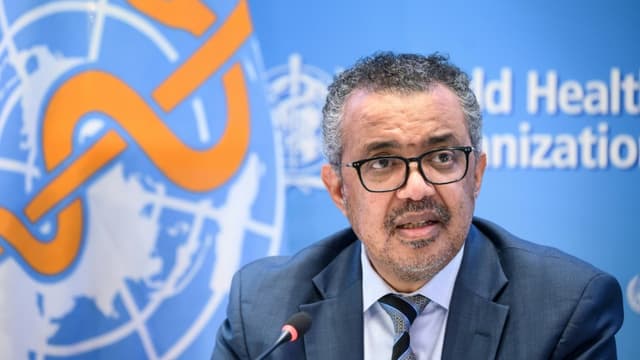
The head of the World Health Organization (WHO), Tedros Adhanom Ghebreyesus, called the situation in Tigray, a region in northern Ethiopia, « the worst disaster of humanity », during a press conference held in Geneva during this week.
« When we talk about a humanitarian crisis, I can tell you that the situation in Tigray is worse than in Ukraine, » he said, as if to warn of the humanitarian crisis raging in this region where he comes from.
It is not a first for Tedros to draw the attention of the international community to the situation in Tigray, or precisely to deplore the indifference of the developed countries on this subject. “I haven’t heard any head of state talk about the crisis in the region. Perhaps the reason is the skin color of the Tigrayans,” he continued, before inviting the authorities in Addis Ababa to do everything possible to bring peace to Tigray.
The conflict in Tigray began in November 2020 when Ethiopian Prime Minister Abiy Ahmed launched a military operation in the region to overthrow his rebel authorities there who were standing up to Addis Ababa.
According to Tedros, since the start of the conflict, Tigray has experienced, among other things, shortages of food and medicine, and has faced multiple epidemics (malaria, anthrax, cholera, diarrhea, etc.).
While the fighting has calmed down, thanks to an indefinite humanitarian truce decreed last March by the Ethiopian government to « save lives and reduce human suffering », the head of the WHO stressed that the food only arrives drop by drop in the region.
Reacting to Tedros’s remarks, the prime minister’s spokeswoman, Billene Seyoum, called them « unethical » and « unworthy of office ».
The World Food Program (WFP) highlighted that 89% of people are food insecure in Tigray, in a recent report which is the result of a survey conducted in accessible areas of the region, where more than 3,000 households were interviewed from May 21 to June 5. This proportion represents an increase of 6 percentage points compared to the last assessment carried out in November 2021, specifies the UN body.
By OMA Newsletter N° 830 of 08/20/2022
Article published under the direction of Dr. Najib Kettani
The OMA, NGO with an Intercontinental vocation
For the development of cultural exchanges
Valuing human potential
The promotion and consolidation of Africa’s development, and
Inter-African integration