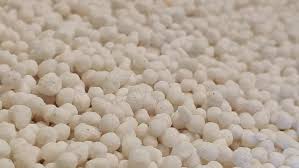
The United Nations announced on Tuesday that a first shipment of fertilizers donated by Russian producers to countries hard hit by rising food insecurity left the Netherlands on Tuesday for Malawi.
In a statement to the press, the spokesman for the Secretary-General of the United Nations, Stéphane Dujarric, welcomed this cargo of 20,000 tons which should pass through Mozambique, before landing in Malawi, a landlocked country.
The UN welcomed the donation of 260,000 tons of Russian fertilizers which are stored in European ports and warehouses. For Stéphane Dujarric, “this will serve to alleviate humanitarian needs and prevent catastrophic crop losses in Africa, where it is currently the sowing season”.
He also indicated that the shipment is the first “in a series of shipments of fertilizers destined for a number of other countries on the African continent in the coming months”.
The world, and particularly Africa, is facing food shortages exacerbated by Russia’s invasion of Ukraine, the two main exporters of food and fertilizers to developing countries, where smallholder farmers are particularly affected by rising costs, inflation and supply chain bottlenecks.
According to Stéphane Dujarric, the UN “is continuing intense diplomatic efforts with all parties to ensure unimpeded exports of essential foodstuffs and fertilizers from sanctions-exempt Ukraine and the Russian Federation, to world markets.
“Reconnecting fertilizer markets is a critical step to achieving global food security by 2023 and the United Nations will continue to work hard, with all parties, to achieve this goal,” he said. .
Up to 222 million women, men and children are projected to face acute food insecurity this year and multiple famines loom. The situation in the Horn of Africa is particularly worrying, with millions of lives at risk.
Note that the ship transporting the cargo to Malawi was chartered by the World Food Program (WFP). “We cannot allow the world’s fertilizer accessibility problems to turn into a global food shortage,” the UN body said recently, adding that “reconnecting fertilizer markets is essential.”
By OMA Newsletter N° 957 of 30/11/2022
Article published under the direction of Dr. Najib Kettani
The OMA, NGO with an Intercontinental vocation
For the development of cultural exchanges
Valuing human potential
The promotion and consolidation of Africa’s development, and
Inter-African integration