Calls to Rwanda, urging it to cease all support for the M23 rebellion active in the east of the Democratic Republic of Congo (DRC), are increasing. This time, it is the turn of the European Union (EU) to charge Kigali.
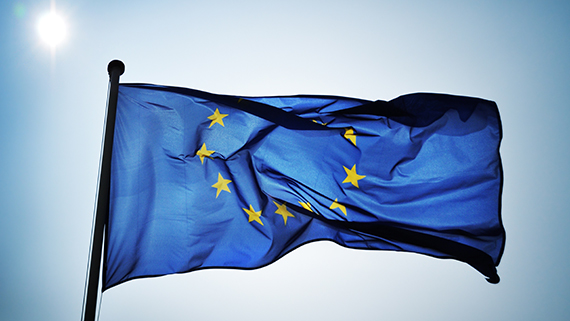
The Union “strongly urges Rwanda to stop supporting the M23 and to use all means to put pressure on the M23 so that it complies with the decisions taken by the States of Central Africa and during the mini-summit in Luanda on November 23, 2022,” said its head of diplomacy, Joseph Borrell, in a press release.
The exit of the High Representative of the EU for Foreign Affairs and Security Policy comes after the publication of a UN report which refers to “the direct intervention of the Rwandan Defense Forces (RDF) in the territory of the DRC”, between November 2021 and October 2022. The authors of the report say they have “substantial evidence”.
The Rwandan army is said to have launched these military operations to “reinforce the M23” and “against the Democratic Forces for the Liberation of Rwanda (FDLR)”, a predominantly Hutu armed group, founded by former leaders of the 1994 Tutsi genocide in Rwanda, according to the expert report.
The M23, which clashes with the Congolese Armed Forces (FARDC) in the eastern part of the DRC, has already seized some localities, specifically in the province of North Kivu. At the end of last November, the rebellion executed at least 131 civilians and committed rape and looting in Kishishe and Bambo, “during acts of reprisal against the civilian population”, according to the UN.
Besides the DRC, other countries have accused Rwanda of supporting the M23 militarily, including the United States, France, Belgium and Spain. But Kigali still denies these allegations and accuses, for its part, the Congolese army of collusion with the FDLR.
The EU also called on the DRC to “stop and prevent any cooperation between the FARDC and armed groups, in particular the FDLR”.
By OMA Newsletter N° 1000 of 02/01/2023
Article published under the direction of Dr. Najib Kettani
The OMA, NGO with an Intercontinental vocation
For the development of cultural exchanges
Valuing human potential
The promotion and consolidation of Africa’s development, and
Inter-African integration