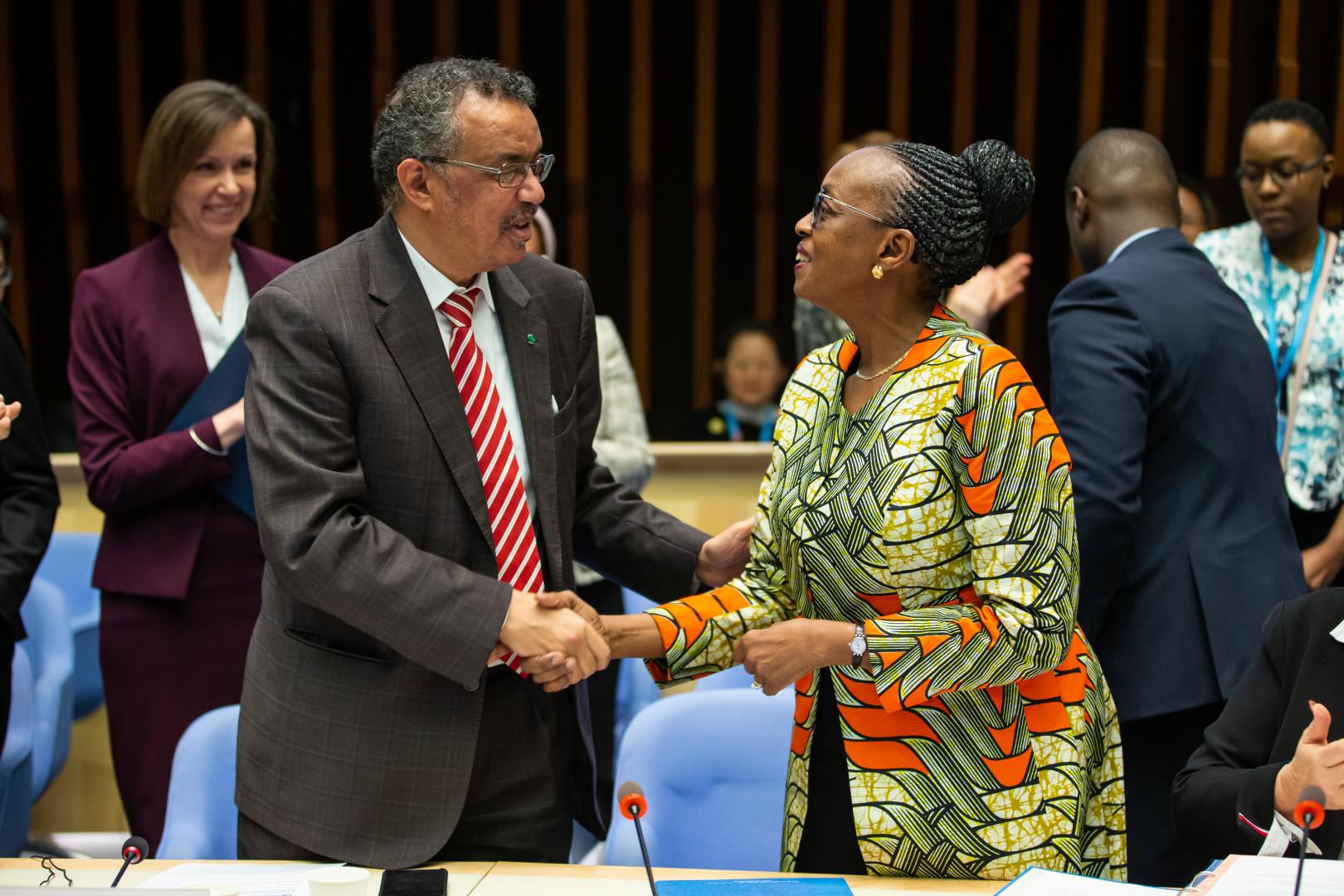
WHO Regional Director for Africa, Dr Matshidiso Moeti says she is delighted to commemorate International Women’s Day which this year is about recognizing women and girls working for advancements in digital technology transformation-oriented.
She believes that the theme chosen for this year’s edition, in particular “For an inclusive digital world: innovation and technologies for gender equality”, underlines the role that innovative technologies play in promoting gender equality. and in meeting the health and development needs of women and girls.
Moeti welcomes the positive effects of certain technological innovations undertaken so far. She recalls, for example, the first WHO Challenge for Innovation in Africa organized in December 2018. It was about finding solutions to Africa’s unmet health needs and recognizing local innovations that could solve the problems of health of this continent.
More than a third of the more than 2,400 applications received from 77 countries came from women-led companies, and one of these companies was chosen as one of the three winners of the Challenge. We must encourage and support such dedication, she said.
However, she calls for more to be done to close the gender digital divide, which will primarily impact on vulnerable women and girls, especially those living in rural and remote areas and whose level of education and socioeconomic status are low.
The Head of WHO-Africa also recalled a 2021 report by the Association of Mobile Operators which revealed that inadequate infrastructure, lack of digital skills regarding internet and ICT, and gender related barriers around Access to and control over resources are key barriers to “meaningful connectivity” for women and girls.
This manager believes that this challenge can be met by raising awareness of the digital gender divide; advocating for policies and legal frameworks that aim to ensure the safety of women and girls; and promoting the participation of women in science, technology and ICT.
By doing so, we will ensure that disadvantaged and vulnerable women and girls also benefit equitably from digital and technological innovations for their better health and well-being, she underlines.
She urged all stakeholders – from governments and partners to civil society and citizens – to support country-driven and gender-responsive approaches to closing the gender digital divide.
By OMA Newsletter N° 1077 of 08/03/2023
Article published under the direction of Dr. Najib Kettani
The OMA, NGO with an Intercontinental vocation
For the development of cultural exchanges
Valuing human potential
The promotion and consolidation of Africa’s development, and
Inter-African integration