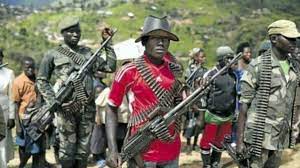
The human rights NGO, Human Rights Watch (HRW), revealed, following investigations on the ground, that units of the Congolese national army would have supported armed groups implicated in serious abuses, during the recent conflict with M23 rebel forces in eastern Democratic Republic of Congo (DRC).
HRW makes its revelations in a press release it published on its site on Tuesday. According to the NGO’s senior DRC researcher, Thomas Fessy, “Congolese army units are again resorting to the discredited and damaging practice of using abusive armed groups as proxies.”
The NGO claims to have conducted interviews since June with five combatants of armed groups, seven witnesses of abuse and family members of victims, as well as with activists, Congolese civilian and military officials, United Nations personnel United Nations and humanitarian workers.
She informs that on May 8 and 9, the leaders of several Congolese armed groups, some of which are rivals, met in the isolated town of Pinga and concluded a non-aggression pact, thus forming a “patriotic” coalition to join their forces to those of the Congolese army against the “aggressor”, that is to say the M23 which finally took control of a town in the east of the DRC, with the support of Rwanda, according to Congolese authorities.
These groups included the Alliance of Patriots for a Free and Sovereign Congo (APCLS) of Janvier Karairi, the Coalition of Movements for Change (CMC/FDP) of Dominique Ndaruhuste known as “Domi”, the Nduma Defense of Congo-Renovated faction ( NDC-R) of Guidon Mwisa Shimirai and the Nyatura Abazungu of the Alliance of Congolese Nationalists for the Defense of Human Rights (ANCDH/AFDP) of Jean-Marie Bonane. All these armed groups are sadly known for their human rights violations in their respective strongholds, deplores the NGO.
Several Congolese army officers reportedly took part in the meeting, led by Colonel Salomon Tokolonga, then in charge of operations and military intelligence of the 3411th regiment; as well as two senior FDLR commanders. Colonel Tokolonga reportedly told HRW by telephone that he attended the Pinga meeting “by coincidence”, because he was “[visiting] troops deployed in the area”.
In some cases, Congolese army officers reportedly provided direct support to armed groups. For example, members of the Congolese army, belonging to the 3411th regiment of Tokolonga, had provided more than a dozen boxes of ammunition to FDLR combatants in Kazaroho, one of their strongholds in the Parc national des Virunga, July 21.
Two months earlier, dozens of FDLR and CMC/FDP combatants reportedly took part in a massive counter-offensive with the regular army in the Rumangabo and Rugari area. The FDLR is a predominantly Hutu Rwandan armed group, some of whose leaders participated in the 1994 genocide in Rwanda. They oppose the regime of Paul Kagame.
In its press release, HRW recalls the speech of President Félix Tshisekedi, held on May 12 before an audience of senior army officers in Kinshasa on May 12, in which he had indicated: “I will not accept that individuals be going out of ethics to combine with negative forces in order to fight other negative forces”, before adding “we do not extinguish the fire by throwing oil on the fire”.
The NGO highlights the arrests of some military officials that occurred a few months after this speech. Without providing its own assessment of these facts, HRW considers that “Tshisekedi’s administration should carry out an overhaul of the security sector, in particular with the adoption of a plan aimed at ending impunity for the perpetrators of serious human rights violations, including a remediation mechanism for the military and other security services, an internationalized judicial entity and a comprehensive reparations program for victims of abuse”.
Such systemic reform, as well as an effective demobilization program for militiamen and armed group fighters, should be at the heart of ongoing regional discussions on the security threat posed by the M23 and other armed groups, the NGO continued. .
By OMA Newsletter N° 903 of 19/10/2022
Article published under the direction of Dr. Najib Kettani
The OMA, NGO with an Intercontinental vocation
For the development of cultural exchanges
Valuing human potential
The promotion and consolidation of Africa’s development, and
Inter-African integration