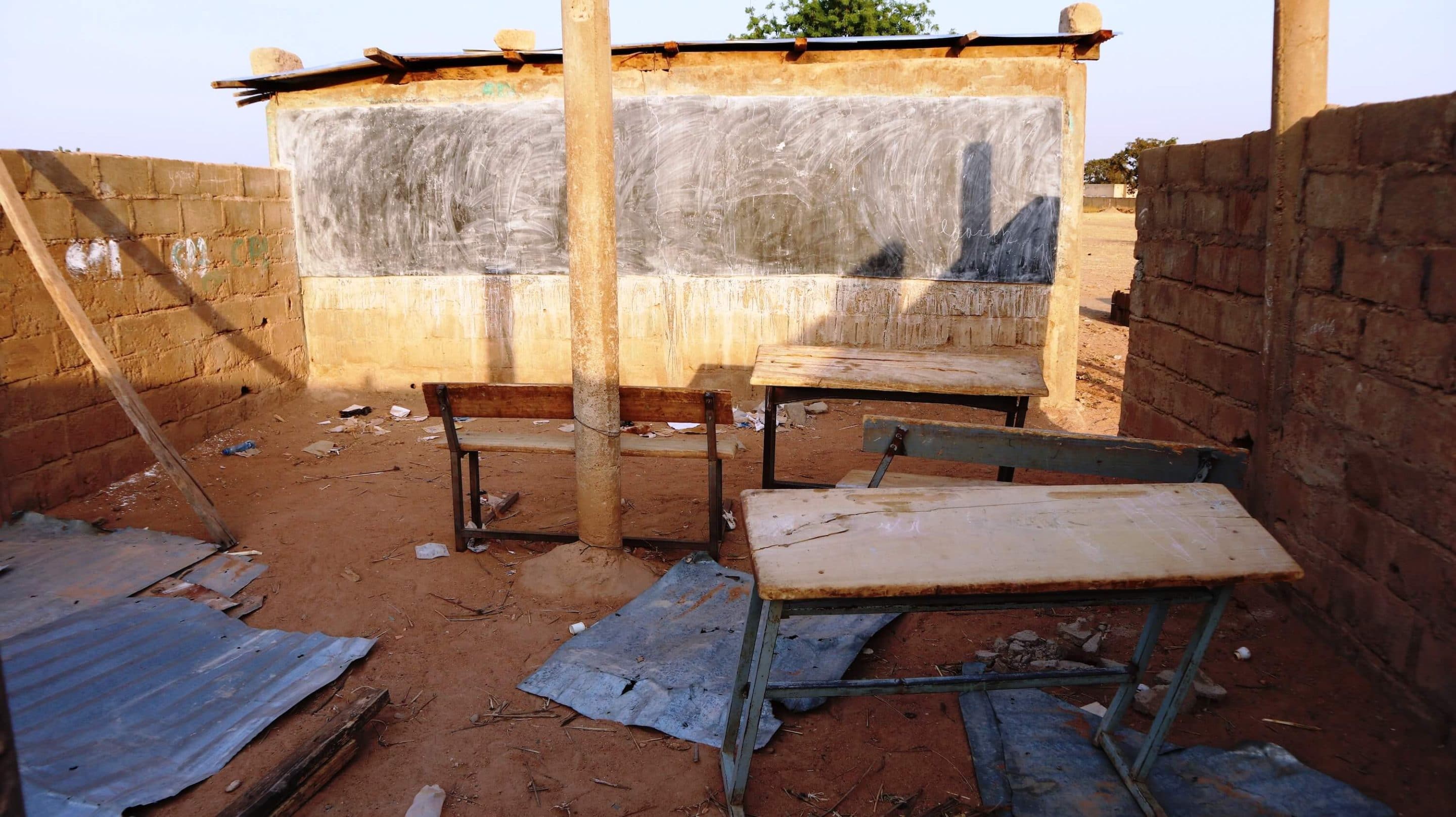
The phenomenon of insecurity is only growing in some countries of West and Central Africa where thousands of schools have been forced to close their doors.
According to the organization Education Cannot Wait (ECW), nearly 12,400 schools in eight countries closed or ceased operation at the end of the 2021-22 school year, and the number of establishments that have forcibly closed or no longer offer courses have increased by a third in two years.
According to this United Nations global fund for education in emergencies and protracted crises, these closures are the direct consequence of attacks by non-state armed groups or the climate of insecurity.
“Either the teachers have fled, leaving no one to teach, or because the parents are too scared to send their children to school or are themselves in the process of being repeatedly forced to move to safer areas,” says the organization.
Of the eight countries concerned, Burkina Faso is the one that has recorded the most closed schools, i.e. 4,258 establishments. A 140% increase in attacks in the southern areas of the country was reported between January 2021 and May 2022, resulting in the displacement of thousands of Burkinabes refugees including children to northeastern Ivory Coast and northern Benin.
Faso is followed by Cameroon (3,285), Mali (1,730), Central African Republic (999), Nigeria (934), Niger (890), Democratic Republic of Congo (307) and Chad (10) .
“Attacks on students, school staff and educational institutions have a devastating impact on access to learning and on the overall development of a society. In addition to the deaths and injuries caused by the attacks, they often lead to reduced student attendance, problems with the deployment and retention of teachers in insecure areas,” ECW points out.
The organization also notes a decline in the quality of education, increased exposure to serious forms of violence and other risks, including child marriage, early pregnancy, forced displacement, child labor and the risk of being recruited by parties to the conflict.
She therefore pleads for continued access to quality educational services to prevent the situation from getting worse. It also calls on governments, all parties to the conflict and the international community to take concerted action to end attacks and threats against schools, students and school staff in West and Central Africa.
By OMA Newsletter N° 849 of 08/09/2022
Article published under the direction of Dr. Najib Kettani
The OMA, NGO with an Intercontinental vocation
For the development of cultural exchanges
Valuing human potential
The promotion and consolidation of Africa’s development, and
Inter-African integration